The Ghost in My Typecode: What '64-MBTI' Reveals About Your Evolving Self
My palms still sweat when I think about it: the moment I realized my own personality type wasn't just 'evolving,' it was doing a full-on Houdini act. It’s about the deep human need to understand who we are, even when the boxes don't fit anymore, even when the very tests we rely on seem to contr




The buzz around '64-MBTI' variations hits on something real: identity isn't a fixed thing. It’s a river, always changing course, and our old 16-type maps often miss that. Wanting more nuanced labels? That's just us trying to make sense of our growth, to integrate the wonderful mess of who we're becoming, not just stay put in some pre-printed box.
- Embrace the 'oscillating' parts of your identity; recognize that personality isn't static, and shifts in your type reflect genuine growth, not a 'mistake' in the system.
- Challenge the allure of fixed labels by viewing personality assessments as conversation starters for self-reflection, rather than definitive pronouncements of who you are.
- Recognize that the desire for a '64-MBTI' or more granular descriptions stems from a healthy human need to integrate complexity and acknowledge personal evolution.
- Instead of obsessing over your 'true type,' ask how your current expression of traits is serving you and where you feel called to grow, allowing your identity to be a dynamic process.
I'll be honest with you: the first time I, a seasoned research psychologist with 14 years under my belt, got a completely different MBTI result on a retest, my palms were sweating. Not for the client, oh no. For me. I’d been an undeniable INTP for years, or so I thought – precise, analytical, a little detached. Then, after a particularly tumultuous period of personal growth and professional pivot, I took it again. Hello, ENFJ.
An ENFJ. The very archetype of the warm, people-focused, emotionally attuned leader. I almost laughed, then felt a hot flush of something very close to shame. Was I faking it? Had I been lying to myself, to my clients, all these years? Had the system itself broken?
It stung. It really did. Because the promise of the MBTI, for many of us, is a kind of stable self-knowledge. A map. A fixed point. And suddenly, my map was gone. Or, rather, it had changed all its major landmarks.
Leo's Chameleon Identity
My own personal identity crisis might have been uncomfortable, but it was nothing compared to what I saw in my clients. Take Leo, for instance. A brilliant, restless UX designer in his early thirties. He first came to me feeling utterly adrift, describing himself as a “personality chameleon.”
Leo first took the MBTI in college, convinced he was an INTP—the quintessential 'absent-minded professor' type. He loved theory, hated small talk, felt most alive in the abstract.
And that felt right. It gave him a framework, a sense of belonging. He even found an online community of fellow INTPs, confirming his self-perception.
Then, four years later, after burning out in a tech startup and taking a more structured project management role, he retested. ISTJ. The meticulous, detail-oriented 'inspector.' He was horrified. “Sarah,” he told me, pinching the bridge of his nose, “I don’t even like details. I tolerate them. Am I a fraud? Is this test just completely meaningless?”
A year after that, having launched his own design agency and embraced a more entrepreneurial, idea-generating role, he found himself leading brainstorming sessions, sparking new concepts daily. He loved the energy, the collaboration. Another retest. This time, he got ENTP.
The 'debater.' The innovative, quick-witted, possibility-driven strategist. Leo was bewildered. “It’s like I’m a different person every few years,” he confessed. “How can I build a stable life, a stable career, if my own core personality is always changing?
He felt broken. The system felt broken. And that’s where my own experience, my own moment of INTP-to-ENFJ whiplash, gave me a profound kind of empathy. So I went back to the data.
When the Data Just Doesn't Agree With Itself
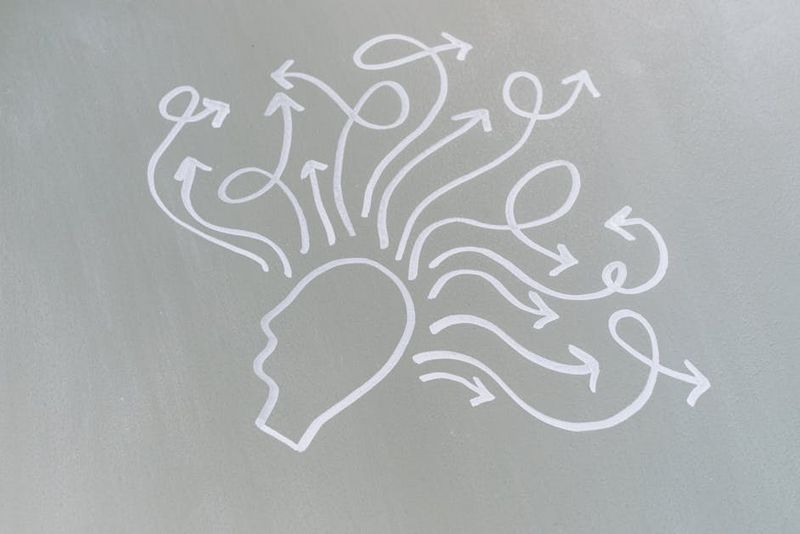
Here's the inconvenient truth about the MBTI, the one that makes us all a little squirmy when we’ve invested so much in our four-letter code: it often changes. Not just for people like Leo or me, but for a significant chunk of the population. A meta-analysis cited by Early Years TV in 2025 indicated that somewhere between 39% to 76% of people receive a different MBTI result when retaking the assessment after just five weeks. Five weeks! That's hardly enough time for a spiritual awakening, let alone a complete personality overhaul.
This isn't a minor glitch. This guts the whole idea that the MBTI captures a stable, lifelong 'type' as Carl Jung theorized and Katharine Cook Briggs and Isabel Briggs Myers developed. If your type is shifting like sand, what are we even measuring?
And it gets stickier. The very dichotomies—Extroversion/Introversion, Sensing/Intuition, Thinking/Feeling, Judging/Perceiving—are problematic. Most studies, as referenced on Wikipedia regarding the MBTI, find that scores on these scales are most people fall somewhere in the middle, not at the extremes. What does that mean? It means most people don't fall neatly into one extreme or the other. They're usually somewhere in the middle. We are a messy, nuanced distribution, not sixteen perfectly separated buckets.
So, the 64-MBTI movement? That's what I find so fascinating as a psychologist, even if it lacks formal scientific validation.
The Longing for a 'Better Fit'
The internet, in its infinite wisdom and collaborative spirit, has started adding suffixes to the traditional 16 types. You see people discussing their type as INTP-A/O, meaning Assertive or Oscillating. Or ISFJ-H/C, Harmony or Calm. There are dozens of these user-created variations popping up, all trying to add a layer of granularity, a deeper shade to the existing paint swatches.
Why? Because we feel the inadequacy of the 16 types. We feel our own internal shifts. We intuit that our identity isn't a static monument, but a living, breathing river, constantly carving new paths.
This online movement? It's a beautiful, messy, collective attempt to fill a psychological gap. It shows our innate desire for accurate self-description, a yearning to be truly seen in all our changing, complicated glory.
What We're Really Chasing
So, here's the insight that really clicked for me after my own type-shift and Leo’s frustrated chameleoning: wanting a '64-MBTI' is more than just chasing a better label. It points to a healthy psychological impulse: to integrate complexity and acknowledge genuine personal growth.
When Leo shifted from INTP to ISTJ, he wasn't suddenly a different person. He was a person in a new environment that demanded more structure, more attention to detail. He was adapting, drawing on less preferred functions, strengthening them. When he became an ENTP, he was leaning into his nascent entrepreneurial spirit, activating his extraverted intuition in a big, bold way.
His 'mistypes' weren't mistakes. They were signals of growth, evidence of an evolving identity.
The real question isn't 'What is my true type?' It’s 'How is my identity evolving, and what does that tell me about where I am now, and where I’m going?'
This reframes the entire conversation. We're not trying to fit ourselves back into a static box. We're observing the box changing shape around us, and sometimes, realizing we need a bigger, more flexible container altogether.
The Quiet Courage of Not Knowing
My own journey from INTP to ENFJ wasn't about becoming someone new, but about integrating aspects of myself that had been less developed. It was about allowing my feeling function, my extraversion, to come to the forefront when my life demanded it. It felt messy, sure, but also deeply freeing.
We often mistake consistency for authenticity. We believe that to be 'true to ourselves,' we must remain unchanged. But life, relationships, career shifts—they demand evolution. They pull different parts of us forward, invite us to grow into new capacities. And sometimes, that means your four-letter code, or even your core Big Five traits, will reflect those shifts.
So, how do we hold this productive tension? That human need for structure and understanding, balanced with the changing reality of an evolving self?
We lean into the 'oscillating' part of our nature. We embrace the both/and. We recognize that searching for a 64-MBTI—or a 128-MBTI for that matter—isn't about finding the perfect label. It’s about honoring the dynamic, complex, glorious process of becoming.
It’s okay if the box doesn't fit anymore. Maybe you’ve outgrown it. Maybe you’re building your own.
Finding Your Own Evolving Compass
For Leo, the shift came when he stopped trying to nail down his 'true' type and started asking, “What qualities does this version of me need right now to thrive?” He began to see his 'type changes' not as personality defects, but as badges of his adaptability and growth.
He started journaling about what aspects of each type resonated most in the moment, and what challenges they presented. This wasn't about finding the perfect box, but about understanding the tools he had in his emotional and cognitive toolkit, and how they changed based on the demands of his life.
For me, my ENFJ awakening was a call to integrate my long-suppressed emotional side with my logical core. It was about recognizing that empathy and analysis aren't mutually exclusive, but powerful allies in helping others—and myself—find clarity.
So, what can you take from this? From my own personal confession, and from Leo’s experience?
Question your labels; they are descriptions, not destinations, and your identity is a dynamic process, not a static state.
Embrace the 'oscillating' parts of yourself, acknowledging that growth often means flexing into less familiar traits and developing new capacities.
See type changes as growth signals, not errors, and recognize that adapting to life’s demands is a sign of strength, not inconsistency.
Use personality frameworks as a mirror for self-reflection and growth, not as an iron cage to define your unchanging essence.
It takes courage, my friends, to step away from the comfort of a fixed label and stand in the beautiful, bewildering space of becoming. But trust me, it’s worth it. That’s where the real self lives.
Coppie di compatibilità
Provi il test dell'amoreLa firma editoriale di MBTI Type Guide. La nostra pagina Metodologia editoriale descrive come i nostri articoli vengono documentati, scritti, revisionati e tradotti.
Domande frequenti
What is the '64-MBTI' and does it have scientific backing?+
Look, the '64-MBTI' is basically people on the internet saying, 'Hey, these 16 types aren't enough.' They're adding suffixes, trying to get more specific. It shows a real hunger for nuance, which I get. But scientifically? No, it's not backed by peer-reviewed studies. It's born from community chatter, not from research labs. Still, it tells us something important about what we're looking for.
Why do my MBTI results sometimes change when I retake the test?+
Short answer? You're changing! Your personality isn't carved in stone; it shifts with life. Beyond that, the MBTI itself? Its test-retest reliability isn't great. We're talking studies showing a big chunk of people—sometimes over half—get a different type after just a few weeks. That’s a red flag if you’re trying to pin down a stable 'you.'
Should I still use the MBTI if my type keeps changing or I feel like I don't fit?+
Don't toss it out completely. But you definitely need to change how you look at it. See it as a snapshot, a quick photo of who you are *right now*. It's a starting point for thinking about your growth, not a permanent tattoo. Embrace the fluidity. Let it spark questions about who you're becoming, instead of letting it nail you down.
Does my personality truly evolve throughout my life, or is it mostly stable?+
Oh, it definitely evolves. Think of it this way: some foundational stuff might stick around, but the way you show up in the world—your priorities, how you connect, even what drives you—that's all going to change and develop. Life happens, relationships happen, and you, my friend, respond and grow. It's a dynamic thing.
Riceva approfondimenti sulla personalità
Articoli settimanali su carriera, relazioni e crescita — personalizzati per il Suo tipo di personalità.
Niente spam, cancellazione in qualsiasi momento. Informativa sulla privacy
Commenti(3)
Wow, Leo's description of himself as a 'personality chameleon' really mirrored my own struggle. For years, I was convinced I was an INTP, loved theory, a bit detached, felt like it was my 'fixed point'. After a really difficult period of personal growth and professional pivot, just like the author, I took the test again. Hello, INFJ. I felt that hot flush of shame, thinking I was a fraud. But the article helped me see my 'mistype' wasn't an error. It was a signal of growth, of allowing my extraverted feeling to come to the forefront when life demanded it, just like the author's ENFJ awakening. It's not about finding the perfect box, but understanding the tools in your toolkit.
The article mentions a meta-analysis showing 39-76% retest changes in five weeks. This isn't evidence of 'evolving self' so much as it is evidence of poor psychometric validity. If the MBTI's dichotomies are problematic and most people fall in the middle, as referenced on Wikipedia, then we should focus on frameworks like the Big Five that actually have longitudinal stability data and aren't trying to force us into 16 or even 64 'buckets'.
This 'oscillating' idea for a 64-MBTI is pretty neat, tbh. It reminds me a lot of Enneagram growth and stress paths, where you 'flex into less familiar traits' to adapt or grow, like how a Type 7 might develop aspects of a Type 5. Also, in Socionics, the concept of accentuations means someone might have a core type but strongly emphasize certain functions, leading to variations beyond the 16 base types. It's all about that 'integrating complexity' the author talks about.
I lettori apprezzano anche
Il tuo tipo MBTI è davvero immutabile? Scopri perché non è così
Per decenni, l'MBTI ha fornito un'istantanea della tua personalità. Ma la scienza moderna ci dice che la personalità è dinamica e fluida, andando oltre le etichette rigide. Scopri di più.
Continua a leggereLa Tua Debolezza Nascosta: Come la Funzione Inferiore Plasma le Tue Relazioni Più Intime
Spesso vista come una semplice 'debolezza', la tua funzione cognitiva meno sviluppata influenza in silenzio le sfide più profonde nelle tue relazioni. Non si tratta di evitare i conflitti, ma di scoprire la struttura nascosta del tuo mondo emotivo.
Continua a leggerePerfezionismo e MBTI: Come Superare la Paralisi da Analisi
La ricerca della perfezione ti blocca? Se ti ritrovi intrappolato nella paralisi da analisi, il tuo tipo MBTI potrebbe darti la chiave per trasformare questa sfida in un punto di forza. Scopri come sbloccare il tuo potenziale.
Continua a leggereLa tua IA ti conosce meglio di te? Scopri il tuo tipo MBTI con l'intelligenza artificiale
L'IA sta rivoluzionando la tipizzazione MBTI, analizzando il comportamento in tempo reale. Questa evoluzione offre nuove prospettive, ma solleva anche interrogativi sull'auto-percezione e l'autonomia personale.
Continua a leggereINTP e INFP: La Logica e il Cuore. Perché le Loro Relazioni Sorprendono?
Un INTP e un INFP insieme? È un mix intrigante di logica e sentimento. Scopri come le loro menti diverse si incontrano e come capire queste sfumature può trasformare un semplice legame in una connessione profonda e autentica.
Continua a leggereLe tue funzioni MBTI non bastano per una carriera a prova di futuro. Ecco cosa serve davvero.
L'IA sta rivoluzionando il mondo del lavoro. Affidarsi solo ai tuoi punti di forza MBTI non basta più. Sviluppare tutte le tue abilità cognitive ti renderà un leader più resiliente, innovativo e adattabile, pronto per il futuro.
Continua a leggereQual è il Suo tipo di personalità?
Faccia la nostra valutazione gratuita su base scientifica e scopra il Suo tipo in pochi minuti.
Faccia il test gratuitoTrovi il Suo partner ideale
Esplori la Sua compatibilità amorosa attraverso personalità, stile di attaccamento e linguaggio dell'amore.
Provi il test dell'amore