MBTI attacco vs difesa: dove cade il Suo tipo? | MBTI Type Guide
MBTI attacco vs difesa: dove cade il Suo tipo?
Si è mai chiesto se il Suo tipo MBTI tende più a strategizzare un attacco o a costruire difese? Analizziamo dove ogni tipo si posiziona sul campo di battaglia della personalità!
DiTeam editoriale MBTI10 aprile 2026
Risposta rapida
Nel grande teatro della personalità, ogni tipo MBTI ha il suo modo preferito di impegnarsi con il mondo. Alcuni caricano di testa, pronti a conquistare, mentre altri preferiscono fortificare le proprie posizioni, anticipando ogni possibile minaccia. Ma dove cade il Suo tipo in questo spettro di atta
Punti chiave
I mastermind del mondo MBTI, gli INTJ sono tutti per gli attacchi calcolati.
Gli INFJ sono come agenti segreti del mondo MBTI.
Gli ISTJ sono i protettori risoluti della tradizione e dell'ordine.
Gli ISTP sono i risolutori di problemi maestri del mondo MBTI.
Quindi, dove cade il Suo tipo MBTI nel campo di battaglia attacco-contro-difesa?
Nel grande teatro della personalità, ogni tipo MBTI ha il suo modo preferito di impegnarsi con il mondo. Alcuni caricano di testa, pronti a conquistare, mentre altri preferiscono fortificare le proprie posizioni, anticipando ogni possibile minaccia. Ma dove cade il Suo tipo in questo spettro di attacco contro difesa?
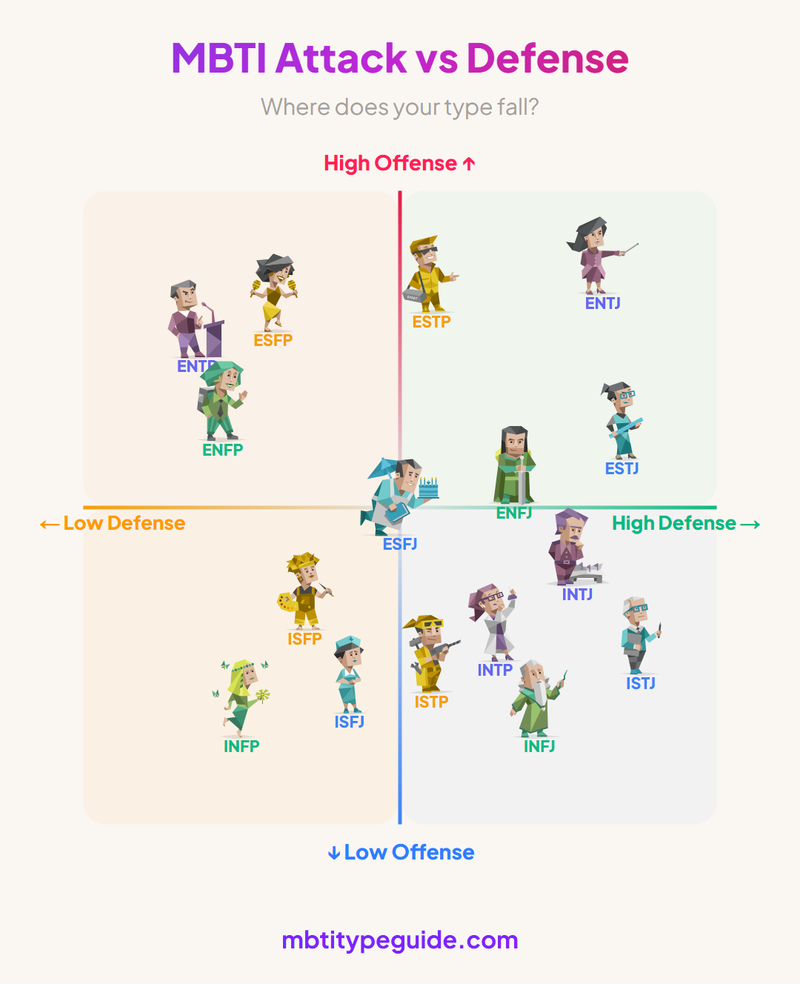
Dimentichi i noiosi diagrammi di flusso! Stiamo tracciando tutti i 16 tipi di personalità su un quadrante del campo di battaglia di tendenze offensive e difensive. Preparatevi per una conversazione reale—non si tratta di aggressività o debolezza, ma di come ogni tipo si avvicina naturalmente alle sfide e protegge i propri valori. È tempo di vedere come il Suo tipo MBTI gestisce la pressione!
Pronto a vedere se è più Sun Tzu o un castello medievale? Iniziamo!
Infographic by mbtitypeguide.com
Gli Analisti (NT)
INTJ — L'Architetto
I mastermind del mondo MBTI, gli INTJ sono tutti per gli attacchi calcolati. Pianificano meticolosamente le loro mosse, anticipando ogni possibile esito, e colpiscono con precisione. Dimentichi la forza bruta; è più probabile che vincano con una strategia eseguita impeccabilmente che non si è nemmeno visto arrivare.
INTP — Il Logico
Gli INTP sono affascinanti perché sembrano difensivi, asserragliati nelle loro fortezze intellettuali. Ma non si faccia ingannare! I loro attacchi arrivano sotto forma di argomenti logici devastanti che smontano la Sua posizione pezzo per pezzo. Preferiscono decostruire il Suo argomento fino a ridurlo in polvere.
ENTJ — Il Comandante
I marescialli di campo. Gli ENTJ sono leader nati che prosperano nel prendere il comando ed eseguire strategie audaci. Il loro attacco è diretto, deciso e spesso lascia i loro avversari a chiedersi cosa li abbia colpiti. Non hanno paura di spianare gli ostacoli sul loro percorso.
ENTP — Il Dibattitore
I dibattitori per eccellenza, gli ENTP trattano ogni interazione come una sparring. Il loro attacco è giocoso, intellettuale e progettato per sfidare i Suoi presupposti. Ma non si confonda: sono altrettanto capaci di difendere le proprie idee con logica e arguzia implacabili.
I Diplomatici (NF)
INFJ — Il Sostenitore
Gli INFJ sono come agenti segreti del mondo MBTI. Sono principalmente difensivi, custodendo attentamente il loro mondo interiore e i loro valori. Ma quando quei valori vengono minacciati? Attenzione. Scateneranno una campagna silenziosa e determinata per proteggere ciò che hanno caro, spesso lavorando dietro le quinte per creare un cambiamento duraturo.
INFP — Il Mediatore
Gli INFP sono i difensori idealisti dei tipi MBTI. Sebbene spesso appaiano gentili e modesti, possiedono un impegno incrollabile verso i propri valori. La loro difesa è radicata nella loro forte bussola morale, che guida le loro azioni e ispira gli altri a difendere ciò in cui credono.
ENFJ — Il Protagonista
Gli ENFJ sono leader carismatici che usano la loro influenza per ispirare e mobilitare gli altri. Il loro attacco è radicato nella loro capacità di connettersi con le persone a livello emotivo, persuadendole efficacemente alla loro causa. Non vincono solo gli argomenti; vincono cuori e menti.
ENFP — Il Campagnolo
I campioni entusiasti dei tipi MBTI, gli ENFP affrontano la vita con ottimismo contagioso. Il loro attacco risiede nella loro capacità di generare entusiasmo e ispirare gli altri a unirsi alla loro causa. Sono le persone hype per eccellenza, trasformando ogni sfida in un'opportunità di crescita e avventura.
Le Sentinelle (SJ)
ISTJ — Il Logistico
Gli ISTJ sono i protettori risoluti della tradizione e dell'ordine. La loro difesa è radicata nella loro meticolosa attenzione ai dettagli e nel loro impegno incrollabile verso regole e procedure. Creano stabilità e sicurezza, assicurando che i sistemi funzionino in modo fluido e prevedibile.
ISFJ — Il Difensore
Gli ISFJ sono i guardiani premurosi del mondo MBTI. La loro difesa risiede nella loro capacità di anticipare i bisogni degli altri e fornire supporto incrollabile. Creano un ambiente sicuro e confortevole, proteggendo i loro cari dal danno e garantendo il loro benessere.
ESTJ — L'Esecutivo
Gli ESTJ sono i leader pragmatici che prendono il comando e portano a termine le cose. Il loro attacco è diretto, efficiente e focalizzato sul raggiungimento di risultati concreti. Non hanno paura di prendere decisioni difficili e di far rispettare le regole, assicurando che tutti siano ritenuti responsabili.
ESFJ — Il Console
Gli ESFJ sono i connettori sociali che prosperano nel creare armonia e costruire comunità. La loro difesa risiede nella loro capacità di anticipare e risolvere i conflitti, mantenendo un ambiente positivo e di supporto. Sono il collante che tiene insieme i gruppi, assicurando che tutti si sentano valorizzati e inclusi.
Gli Esploratori (SP)
ISTP — Il Virtuoso
Gli sono i risolutori di problemi maestri del mondo MBTI. Il loro attacco è preciso e analitico, focalizzato sull'identificazione della causa principale dei problemi e sulla ricerca di soluzioni pratiche. Non hanno paura di sporcarsi le mani e armeggiare con le cose finché non funzionano perfettamente.
La firma editoriale di MBTI Type Guide. La nostra pagina Metodologia editoriale descrive come i nostri articoli vengono documentati, scritti, revisionati e tradotti.
Domande frequenti
INTJ — L'Architetto+
I mastermind del mondo MBTI, gli INTJ sono tutti per gli attacchi calcolati. Pianificano meticolosamente le loro mosse, anticipando ogni possibile esito, e colpiscono con precisione. Dimentichi la forza bruta; è più probabile che vincano con una strategia eseguita impeccabilmente che non si è nemmen
INTP — Il Logico+
Gli INTP sono affascinanti perché sembrano difensivi, asserragliati nelle loro fortezze intellettuali. Ma non si faccia ingannare! I loro attacchi arrivano sotto forma di argomenti logici devastanti che smontano la Sua posizione pezzo per pezzo. Preferiscono decostruire il Suo argomento fino a ridur
ENTJ — Il Comandante+
I marescialli di campo. Gli ENTJ sono leader nati che prosperano nel prendere il comando ed eseguire strategie audaci. Il loro attacco è diretto, deciso e spesso lascia i loro avversari a chiedersi cosa li abbia colpiti. Non hanno paura di spianare gli ostacoli sul loro percorso.
ENTP — Il Dibattitore+
I dibattitori per eccellenza, gli ENTP trattano ogni interazione come una sparring. Il loro attacco è giocoso, intellettuale e progettato per sfidare i Suoi presupposti. Ma non si confonda: sono altrettanto capaci di difendere le proprie idee con logica e arguzia implacabili.
INFJ — Il Sostenitore+
Gli INFJ sono come agenti segreti del mondo MBTI. Sono principalmente difensivi, custodendo attentamente il loro mondo interiore e i loro valori. Ma quando quei valori vengono minacciati? Attenzione. Scateneranno una campagna silenziosa e determinata per proteggere ciò che hanno caro, spesso lavoran
Riceva approfondimenti sulla personalità
Articoli settimanali su carriera, relazioni e crescita — personalizzati per il Suo tipo di personalità.
Gli ISFP sono le anime artistiche che si esprimono attraverso la creatività e l'azione. La loro difesa risiede nella loro capacità di adattarsi alle circostanze mutevoli e trovare bellezza nel momento presente. Vivono autenticamente, abbracciando la loro unica individualità e ispirando gli altri a fare lo stesso.
ESTP — L'Imprenditore
Gli ESTP sono i cercatori di emozioni forti del mondo MBTI, sempre pronti per una nuova sfida. Il loro attacco è spontaneo e opportunistico, cogliendo ogni opportunità per spingere i propri limiti e fare nuove esperienze. Sono gli improvvisatori per eccellenza, adattandosi a qualsiasi situazione con fiducia e stile.
ESFP — L'Intrattenitore
Gli ESFP sono l'anima della festa, portando gioia ed entusiasmo in ogni situazione. La loro difesa risiede nella loro capacità di connettersi con le persone a livello emotivo, diffondendo la tensione e creando un'atmosfera positiva. Sono gli intrattenitori per eccellenza, facendo sentire tutti a proprio agio e benvenuti.
Cosa ne pensa?
Quindi, dove cade il Suo tipo MBTI nel campo di battaglia attacco-contro-difesa? Speriamo che questa analisi Le abbia dato qualche risata e una nuova prospettiva su come il Suo tipo di personalità si impegna con il mondo. Ricordi, non si tratta di essere aggressivi o passivi, ma di sfruttare i propri punti di forza naturali per raggiungere i propri obiettivi.
Ha trovato questa analisi nel segno, o pensa che il Suo tipo abbia un'arma offensiva (o difensiva) segreta che abbiamo mancato? Vada ai commenti e ce lo faccia sapere!