ISTP and ISTP Compatibility
Explore the relationship dynamics between ISTP (The Virtuoso) and ISTP (The Virtuoso)
ISTP and ISTP share 4 dimension(s) and differ on 0. This creates a dynamic relationship with both natural understanding and growth opportunities.
Shared dimensions: E/I, S/N, T/F, J/P
Compatibility by Area
What You Share
- +Both value quiet reflection and inner depth
- +Both value practical, concrete information
- +Both prioritize logic and objective analysis
- +Both enjoy flexibility and spontaneity
Communication Tips
Practice active listening and validate each other's perspective before offering solutions
Key Insights
- 1Parallel universe: the nod contains multitudes. Both understand that actions ARE the declarations
- 2Shared workshop: collaborate on the same project, not parallel projects. Shoulder-to-shoulder competence is ISTP intimacy
- 3Emotional desert: build minimal emotional infrastructure with micro-exchanges that sound like status reports. Prepare before crisis demands it
- 4Freedom agreement: least controlling relationship possible. One intentional shared activity per week prevents drift
- 5Love that does: fixing, building, noticing — everything important happens in the space between what isn't said
In-Depth Analysis
1The Parallel Universe
Two ISTPs together create a relationship that barely looks like a relationship from the outside. No drama. No long conversations about feelings. No social media declarations. Just two competent people sharing a space, solving problems independently, and occasionally acknowledging each other with a nod.
The nod contains multitudes.
Both ISTPs understand that love doesn't require constant verbal confirmation. Both know that actions speak louder than declarations. Both appreciate that the best form of respect is giving someone space to be exactly who they are.
The household operates with remarkable efficiency and almost no discussion. Both people handle their responsibilities without being asked. Both fix problems without being told. Both maintain their individual projects without requiring the other's involvement or approval.
The silence isn't cold. It's comfortable — the kind of silence that only exists between two people who don't need to fill the air with noise to feel connected. Both ISTPs understand this silence because they both prefer it.
The risk: the comfortable silence becomes disconnection. Two people who both prefer solitude can drift into separate lives without either person noticing. The parallel lines never intersect.
2The Shared Workshop
ISTPs bond through doing, not talking. The shared workshop — literal or metaphorical — is where this relationship comes alive.
Building something together. Fixing something together. Taking something apart and putting it back together better. The ISTP's love language is competence applied collaboratively — and when both people speak this language, the collaboration is seamless.
No one needs to explain the approach. Both people see the problem, analyze it independently, and arrive at complementary solutions. The communication is minimal and precise. 'Hand me that wrench.' 'Try the other bolt first.' 'That won't hold — use the longer screw.'
This functional communication IS intimacy for two ISTPs. The trust required to collaborate without extensive discussion — the assumption that the other person is competent, observant, and contributing — is a deeper form of respect than most types ever experience.
The shared workshop extends beyond literal projects. Cooking together. Solving a logistical problem. Planning a trip by dividing the practical tasks and executing independently. Any activity that involves parallel competence applied to a shared goal becomes a bonding experience.
The key: make the workshop shared, not parallel. Working in the same space on separate projects is comfortable but not connecting. Working on the same project — shoulder to shoulder, tools in hand — is where the relationship deepens.
3The Emotional Desert
Both ISTPs have Fi — introverted Feeling — in the tertiary position. Both have genuine feelings that they rarely express. Both experience emotions as private events that don't require external processing.
Two people who both prefer emotional silence create an emotional desert — not barren, but dry. Feelings exist beneath the surface. Neither person draws them to the top.
The desert works fine in stable times. Both people are content with the unspoken understanding that they care about each other. Neither needs declarations. Neither needs processing. The relationship runs on demonstrated reliability rather than expressed emotion.
But when emotional complexity arrives — grief, fear, relational uncertainty — the desert becomes dangerous. Neither person knows how to initiate the emotional conversation. Neither person knows how to respond to the other's rare emotional disclosure. Both are caught without tools in a situation that requires tools they've never developed.
The preparation: build minimal emotional infrastructure before it's needed. Not lengthy conversations — small emotional exchanges. 'I appreciated you being there today.' 'That situation bothered me more than I expected.' Brief, factual-sounding statements that acknowledge the existence of feelings.
These micro-exchanges are easy for ISTPs — they sound almost like status reports. But they build an emotional vocabulary that both people can draw on when something bigger requires it.
4The Freedom Agreement
Two ISTPs share an extraordinary need for personal freedom. Both need time alone. Both need independence. Both need the ability to pursue their interests without explaining, justifying, or reporting.
This shared need creates the least controlling relationship in the type system. Neither person monitors the other's activities. Neither person requires check-ins. Neither person feels threatened by the other's independence.
The freedom agreement is usually implicit — neither person needs to articulate it because both naturally grant what they need themselves. The ISTP who spends Saturday at a motorcycle rally doesn't explain or apologize. The other ISTP who spends Saturday in the workshop doesn't explain or apologize. Both return, both are content, both resume sharing space.
The risk, again, is drift. Two people who never check in can drift apart without either person noticing — or caring enough to notice. The freedom that makes the relationship comfortable can also make it dispensable.
The anchor: one intentional connection per week. Not a relationship talk — a shared activity. A meal. A project. Something that requires both people to be present and engaged with each other rather than with their independent worlds.
The ISTP couple who maintains this anchor has a relationship that is both free and connected — which is the only configuration that works for two people who need as much space as ISTPs do.
5The Love That Does
ISTP-ISTP love does. It doesn't say. It doesn't declare. It doesn't perform. It fixes the leaky faucet at midnight because the dripping bothered the other person. It replaces the brake pads without being asked. It handles the problem quietly and completely.
Both people express love through competent action. Both people receive love through competent action. The loop is closed and self-sustaining — as long as both people are paying enough attention to notice what the other is doing.
An ISTP on their ISTP: 'She fixed my motorcycle. I didn't ask. I didn't even tell her it was running rough. She just noticed — the way the engine sounded, the slight hesitation on acceleration. She diagnosed it, ordered the part, and fixed it on a Tuesday afternoon. When I rode it home from work, it ran perfectly. She didn't say anything. I didn't say anything. But I knew. And she knew I knew. That's how we work. Everything important happens in the space between what we don't say.'
The other ISTP: 'He built me a workbench. Not for my birthday, not for an occasion — just because he noticed I was working on the floor. He measured the garage, calculated the dimensions, and built it over three evenings. Solid. Level. Exactly the right height. He didn't make it romantic. He didn't even tell me he was building it. It just appeared, perfect and functional and made by someone who paid close enough attention to know exactly what I needed. That's his love. Precise. Practical. Perfect.'
Type Profiles
The Virtuoso
“The Craftsman”
ISTPs are bold and practical experimenters, masters of all kinds of tools. They are observant, cool-headed, and resourceful problem-solvers who enjoy exploring with their hands and eyes. ISTPs have an innate understanding of mechanics and a knack for troubleshooting.
View full profileThe Virtuoso
“The Craftsman”
ISTPs are bold and practical experimenters, masters of all kinds of tools. They are observant, cool-headed, and resourceful problem-solvers who enjoy exploring with their hands and eyes. ISTPs have an innate understanding of mechanics and a knack for troubleshooting.
View full profileExplore More Pairs
Related Articles
Your Unseen Weakness: How the Inferior Function Shapes Your Closest Bonds
Often dismissed as mere 'weakness,' your least preferred cognitive function silently orchestrates profound challenges in your intimate relationships. This is not about avoiding conflict. It is about uncovering the hidden architecture of your emotional world.
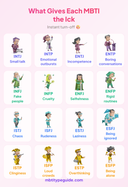
What Instantly Gives Every MBTI Type the Ick
Ever wondered what makes each MBTI type cringe? From fake enthusiasm to illogical arguments, we've got the ultimate list of instant turn-offs!
The Silent Conflict: How MBTI Shapes Financial Futures
Beyond superficial 'love languages,' our innate MBTI preferences significantly shape how we earn, save, and spend. Understanding these often-unseen financial 'scripts' is an important, yet frequently overlooked, element to creating deeper harmony in relationships.
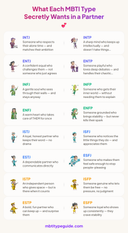
What Every MBTI Type Secretly Wants in a Partner
Ever wonder what your MBTI type *really* craves in a relationship? Get ready for some juicy insights into the secret desires of all 16 types!
Discover Your Type
Take our free personality test and find your compatibility with all 16 types.