The INFP's Quest for a Co-Conspirator: Why Shared Values Aren't Enough
INFPs yearn for a 'partner in crime' who actually understands their unique worldview. But when deep idealism collides with reality, what does this elusive connection actually demand beyond mere shared values?


INFPs seek a 'partner in crime' who transcends shared values, acting as a co-conspirator in their personal pursuit of meaning. This pursuit is complicated by their rarity and tendency to idealize, demanding a partner who champions their idealism rather than just tolerating it.
- INFPs, constituting a rare 4-5% of the population, face a unique challenge in finding partners who align with their deep desire for a 'mind-reading' connection, as detailed by Susan Storm (2021).
- The INFP tendency to idealize partners, observed by Dario Nardi (2023), often masks the true individual, complicating the search for an authentic 'partner in crime' beyond mere shared values.
- A genuine 'partner in crime' for an INFP isn't just someone who shares values, but a co-conspirator who champions their personal pursuit of meaning and actively engages with their deep idealism, even when it is unconventional.
Most people, when they consider relationships, think about shared interests or complementary personalities. For the INFP, the 'Mediator' of the Myers-Briggs typology, the stakes are considerably higher. They are driven by an internal compass pointing toward profound, authentic connection. A 2021 survey by Susan Storm of Psychology Junkie highlighted that INFPs often report a desire for a 'mind-reading' connection with others, valuing an almost telepathic sensitivity to emotional nuance. Yet, the Myers-Briggs Foundation's 2022 data reveals a striking counterpoint: INFPs comprise a mere 4-5% of the global population. How, then, does a type so rare, so deeply yearning for a singular, almost spiritual bond, ever find it?
Elara, a software architect in Seattle, understood this paradox intimately. She was the kind of person who could spend hours contemplating the ethics of AI, or designing a garden based on the principles of permaculture. Her online dating profiles were always honest, if a little esoteric: 'Seeking a co-conspirator in life's grand adventure, someone who dreams in color and isn't afraid to question the status quo.' She wasn't looking for a casual companion. Not even close. She sought a partner in crime. Someone who saw the world as a canvas of infinite possibility, rather than a fixed set of rules. For years, her search had yielded a predictable pattern: initial sparks, deep conversations about hypothetical futures, then the slow, inevitable fade as the reality of everyday life asserted itself. Partners, she found, often admired her idealism from a distance but rarely genuinely joined her in it.
But this quest, she was learning, came with a hidden cost.
The Weight of an Ideal
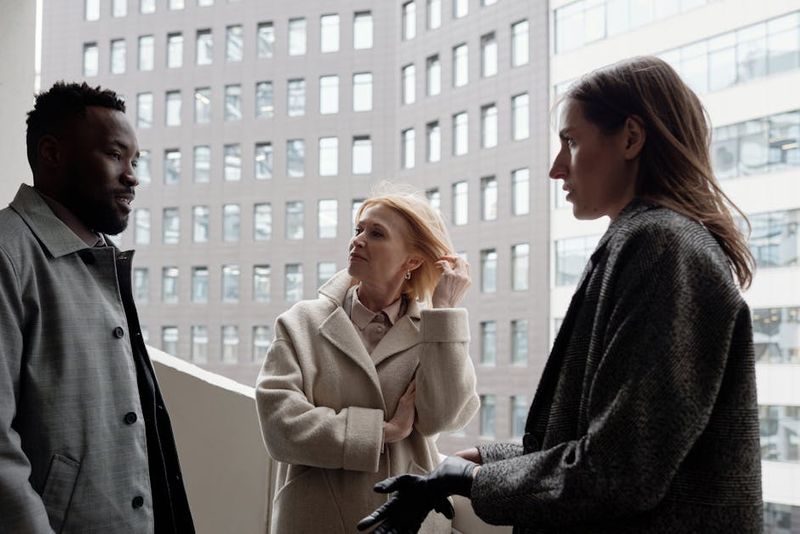
Elara found herself in a recurring pattern. Within weeks of meeting someone new, a vivid mental portrait would form: a person of profound depth, unwavering integrity, and an almost poetic understanding of the world. Her imagination, fueled by a rich inner life, diligently filled in any gaps.
This tendency, the placement of a partner on a pedestal, is a common thread in the INFP experience. Personality expert Dario Nardi, Ph.D., observed this phenomenon, noting that INFPs' characteristic sensitivity and idealism can lead them to project an idealized version onto their partners. Such projection, he found, often prevents them from seeing the actual individual standing before them. It is a kind of anticipatory devotion.
Her last serious relationship, with a pragmatic engineer named Ben, illustrates this precisely. Elara had envisioned a life of shared purpose: building an off-grid cabin, teaching sustainable farming, perhaps even collaborating on children's books. Grand, interconnected plans.
Ben, however, cultivated different ambitions. His focus remained on a comfortable suburban existence, a well-kept yard, and his regular golf league. He genuinely admired Elara’s expansive visions, but they remained distinctly her visions. The divergence, when the reality of Ben's desires failed to align with her elaborate mental architecture, was not a matter of ill will. It was simply a profound mismatch of blueprints for a future.
This creates a potent paradox for INFPs: a deep, almost spiritual craving for authentic connection, coupled with a profound fear of vulnerability and potential disappointment due to past hurts. To reveal the full scope of their internal world, their most cherished ideals, feels like offering a fragile, illuminated manuscript to a stranger. What if it’s merely glanced at? Or, worse, dismissed as impractical fantasy?
A silent, internal battle.
The Rare Co-Conspirator
To understand what an INFP means by a 'partner in crime,' one must look beyond the conventional definitions of compatibility. This is not about merely shared hobbies or even a shared worldview. It is about a co-conspirator who comprehends, deeply comprehends, their specific, sometimes unconventional, approach to meaning and purpose. It is someone who doesn't just tolerate their idealism but actively supports their quest, however abstract or impractical it might seem.
This search is made inherently difficult by sheer numbers. The Myers-Briggs Foundation's 2022 statistics show INFPs making up only 4-5% of the general population. Finding someone who resonates with such a specific internal frequency, let alone someone who can grasp its intricacies, is akin to searching for a particular star in an impossibly vast sky. It’s not just a matter of connection; it’s a statistical anomaly.
Licensed therapist Gabrielle Applebury, LMFT, points to the challenges faced by partners of INFPs in understanding their specific needs. An INFP’s requirement for solitude, their often-lengthy internal emotional processing, and their subtle, sometimes indirect communication style can be misinterpreted. Elara, for instance, had a partner, Marcus, who perceived her quiet contemplation as withdrawal, her need for space as disinterest. (It was a misunderstanding I've seen play out in countless relationships, a quiet misfire of intent and interpretation.) He couldn't grasp that her silence wasn't an absence of feeling, but often an intensity of it, a processing of emotions too vast for immediate articulation.
The difficulty, then, extends beyond merely finding a match. It becomes about finding a translator.
Beyond Shared Values: Championing the Quest
Conventional wisdom often suggests INFPs merely need to adjust their expectations to the realities of human relationships. But what if that’s the wrong question entirely? What if the issue lies not with idealism itself, but how it is defined and pursued within a partnership? Susan Storm's 2021 work revealed the complexities, even among INFPs. While they often connect on a deep, intuitive level, their individualistic nature means that when opposing values do arise, they can cause significant conflict. This indicates that shared values alone do not provide the complete answer. A true co-conspirator is not simply a mirror, reflecting the INFP's own thoughts and beliefs. They are someone who actively champions the INFP's personal pursuit of meaning, engaging with their deep idealism and creative expressions, rather than merely tolerating or adjusting to them.
This was the critical shift. Licensed therapist De-Andrea Blaylock-Solar, MSW, LCSW-S, CST, has observed how partners who do more than understand an INFP’s inner world, but actively encourage its exploration, create significant impact. The question then becomes: not how can an INFP find a partner who shares all their ideals, but how can they find a partner who comprehends and supports their specific mode of idealism, allowing them to pursue meaning not just in parallel, but together?
Elara began to reframe her search. She stopped looking for someone who echoed her every thought and started looking for someone who could enrich them. She found herself gravitating towards individuals who were curious, who asked probing questions, who saw her idealism not as naive, but as a wellspring of potential. She sought partners who were willing to engage in the philosophical debates she craved, or collaborate on small creative projects, even if the vision wasn't precisely theirs. She wanted someone who could hold space for her inner world, and occasionally, venture into it.
It was a subtle but profound shift.
Her dating profile changed again. Less about shared dreams, more about shared curiosity. She started to articulate not just what she envisioned, but how she wanted to explore it. She emphasized the expedition, not just the destination.
The Expedition Continues
Elara, the architect of her own inner world, eventually met Liam, a landscape designer. He was not an INFP; he was an ISTP, grounded and pragmatic, but with a deep, almost scientific curiosity about natural systems and human interaction. He didn't always share her expansive visions for social change, but he listened, he asked incisive questions, and he offered practical pathways for her to explore her ideas. When Elara spoke of building a community garden that fostered radical inclusivity, Liam didn't just nod. He asked about soil composition, sunlight angles, and the logistics of shared labor. He didn't dim her idealism; he gave it roots.
He became her co-conspirator not by adopting her dreams, but by helping her refine them, by offering a different, equally valid lens through which to view their potential. He appreciated her idealism not as a fluffy abstraction, but as a driving force for meaningful action. He challenged her to articulate the how, not just the what.
The 'partner in crime' for an INFP, then, may not be a perfect reflection of their soul, but rather someone who stands alongside them, perhaps with a different map, but with an unwavering commitment to the expedition itself. It is not about finding an identical twin for the soul, but a fellow traveler who understands the distinct path the INFP seeks to explore. The quest for meaning, after all, is rarely a solitary endeavor, even for the most fiercely individualistic among us. It simply requires the right kind of companion. The quest does not end; it simply gains a new dimension.
The editorial byline for MBTI Type Guide. How our articles are researched, written, reviewed and translated is described on our Editorial Methodology page.
Frequently Asked Questions
What does 'partner in crime' mean for an INFP?+
For an INFP, a 'partner in crime' signifies more than shared values. It describes a co-conspirator who deeply comprehends and champions their distinct, often unconventional perspective and their personal pursuit of meaning, actively engaging with their profound idealism rather than merely observing it.
How does INFP idealism affect relationships?+
This idealism frequently manifests as 'pedestal placement.' An INFP projects an idealized version onto a partner, obscuring the actual individual. Dario Nardi, a personality expert, has detailed this phenomenon, highlighting the gap it creates between an INFP's often elevated expectations and the realities of a relationship.
Why is it difficult for INFPs to find compatible partners?+
Statistical data from the Myers-Briggs Foundation (2022) reveals INFPs constitute only 4-5% of the population. This demographic rarity presents a challenge in locating individuals who resonate with their specific sensitivities and ideals. Even within seemingly similar personality types, an INFP's individualistic core can introduce friction.
Get Personality Insights
Weekly articles on career, relationships, and growth — tailored to your personality type.
No spam, unsubscribe anytime. Privacy Policy
Comments(4)
My 'Mediator' partner made me read this. Honestly, 'seeking a co-conspirator in life's grand adventure' sounds exhausting lol. I'm more like Liam, trying to give roots to the 'radical inclusivity garden' ideas, even if I'm just asking about soil composition.
While the narrative about Elara is compelling, the MBTI itself lacks sufficient empirical validation for such specific relationship dynamics. Concepts like 'mind-reading' connection are psychological constructs better explored through cognitive science, often with more robust frameworks like the Big Five personality traits, rather than a typology model.
I was mistyped as an ISTP for so long because I'm quiet and can be pragmatic about specific tasks, but I always knew there was a deeper, unarticulated internal world. What changed was realizing my need for solitude and lengthy emotional processing, which Marcus misconstrued as disinterest in the article, was a core part of me. Finding my real type helped me understand this 'silent, internal battle' for authentic connection.
People Also Enjoy Reading
Your Unseen Weakness: How the Inferior Function Shapes Your Closest Bonds
Often dismissed as mere 'weakness,' your least preferred cognitive function silently orchestrates profound challenges in your intimate relationships. This is not about avoiding conflict. It is about uncovering the hidden architecture of your emotional world.
Read moreWhy Your MBTI Type Still Outsmarts AI in the Labyrinth of Love
True understanding, the kind that cultivates growth and deep connection, still resides in the nuanced framework of human personality.
Read moreWhy Most Relationship Advice Misses Your Hidden Saboteur
Often, the persistent patterns derailing our connections aren't about conscious incompatibility, but a subtle, often invisible psychological force at play. This force, our inferior cognitive function, operates in the shadows, quietly undermining the very bonds we strive to strengthen.
Read moreWhy Your MBTI Type Redefines Financial Freedom
Beyond simple budgeting, your personality shapes how you earn, save, and ultimately define wealth. Discover how your unique MBTI type can forge its own path to lasting financial independence.
Read moreYour MBTI Spirit Animal: A Surprisingly Accurate Guide
Ever wondered what your spirit animal is based on your MBTI type? Prepare for some surprisingly accurate (and hilarious) insights. Find out now!
Read moreWhy the MBTI's Reliability Is Up for Debate — and What You Should Know
Fifty years on, the Myers-Briggs Type Indicator remains a global phenomenon for self-discovery. Yet its scientific standing is fiercely debated.
Read more