INTJ Vulnerability: Logic, Longing, and Connection | MBTI Type Guide
When Logic Meets Longing: The INTJ Vulnerability Paradox
For strategic INTJs, emotional vulnerability feels like a paradox, pitting their logical fortress against deep connection. While the world increasingly values emotional openness, many INTJs find themselves at a crossroads.
ByMBTI Editorial TeamMarch 9, 20268 min read
INTJ
Quick Answer
INTJs see emotional vulnerability as a paradox: a conflict between their need for logical control and the wildness of feelings. This comes from intense, analytical emotional processing, not a lack of emotion. Building genuine connection requires a specific environment and partner understanding to manage these risks.
Key Takeaways
INTJs struggle with emotional vulnerability because they process feelings intensely and analytically, perceiving them as chaotic and difficult to control, rather than from an absence of emotion.
Societal expectations for emotional openness often clash with an INTJ's internal processing, where vulnerability is viewed as a high-stakes strategic investment, not a spontaneous expression.
For partners of INTJs, providing a structured, logical environment for communication, grounded in an understanding of their cognitive functions, proves more effective than expecting conventional emotional responses.
The long-term avoidance of emotional vulnerability carries significant psychological strain, including loneliness and burnout. Strategic engagement with emotional risk-taking is critical for INTJs to forge deeper connections.
For the strategic INTJ, emotional vulnerability presents a complex problem. It is a paradox, truly, pitting their logical fortress against the very foundation of deep connection. While the world increasingly values emotional openness, many INTJs find themselves at a crossroads: how can a mind wired for efficiency and control embrace the unpredictable chaos of the heart?
Consider the numbers. A recent finding, cited in The Sun's 2025 Personal & Emotional Vulnerability Statistics, revealed something striking: 75% of singles now consider discussing mental health a 'green flag' in a romantic partner.
This marks a societal declaration. Emotional openness, once a personal preference, has become a benchmark for relational health. For a distinct segment of the population, however, this rising tide of emotional transparency presents a profound challenge. A deep, unsettling kind of friction.
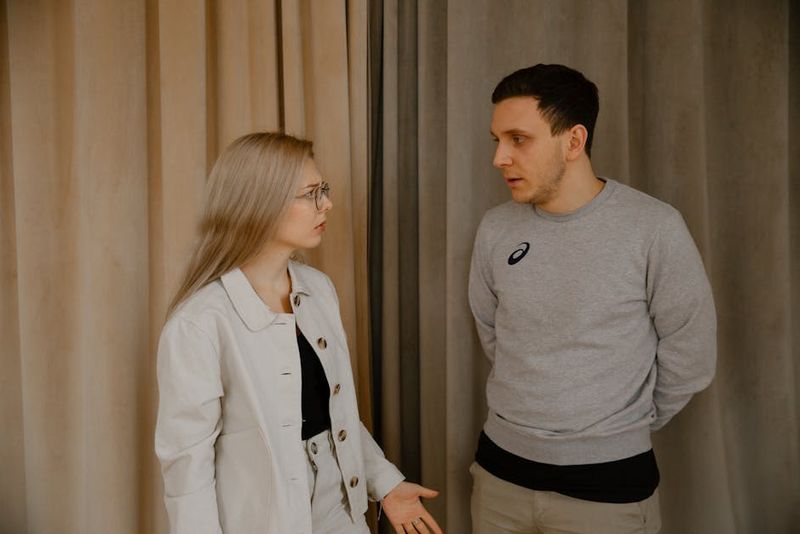
Arthur, a software architect in Boston, knew this friction intimately. It was a Tuesday evening in late October, the city lights reflecting off the slick cobblestones outside his apartment window, a fine, cold drizzle pattering against the glass. His partner, Clara, sat opposite him on the sofa, her arms crossed, a familiar tension settling in the air. They were discussing a minor disagreement about weekend plans, a logistical puzzle in Arthur’s mind. Clara, however, felt something else entirely. She felt dismissed. Unheard. She said, “Arthur, why can’t you just say how you feel? Why is everything a calculation?”
Arthur paused. He could feel the analytical gears turning, attempting to parse her question into a solvable problem. How do I feel? he thought. He felt confused by the emotional escalation.
He felt a logical desire for resolution. He felt a growing impatience with what seemed, to him, an illogical detour. He formulated a response, precise and reasoned, about the efficiency of their proposed schedule, about minimizing disruption. He saw her face fall. He saw her pull away. He had offered a solution when she had asked for a feeling. He was, in his own logical framework, attempting to optimize the interaction. But the interaction, it turned out, was not a problem to be solved.
He was wrong.
What Arthur, and countless others like him, grappled with was not a deficit of emotion, but a fundamental misunderstanding of its architecture within the strategic mind. The world often perceives such individuals as cold or detached. But the evidence suggests a far more intricate inner world.
Myth #1: INTJs Are Emotionally Unfeeling
The common narrative paints INTJs as logical automatons, impervious to the messy currents of emotion. Their reserved demeanor, their preference for analytical discourse over spontaneous expressions of sentiment, fuels this perception. They do not wear their hearts on their sleeves. They rarely engage in emotional effusions that characterize many other personality types. For a partner seeking immediate emotional reciprocity, this can be profoundly frustrating, leading to the conclusion that the INTJ simply doesn't care.
Here's the deal. What appears as an absence of feeling is, in fact, a distinct mode of processing. For many INTJs, emotions are experienced intensely, almost overwhelmingly. This internal intensity, coupled with a dominant introverted intuition (Ni) that seeks patterns and implications, can make raw, unfiltered emotional expression feel like a dangerous, unpredictable force. It's like trying to navigate a complex algorithm where the variables constantly shift without warning.
The Real Story
The INTJ's primary cognitive functions, Introverted Intuition (Ni) and Extraverted Thinking (Te), form a powerful internal system geared towards prediction and efficiency. When confronted with emotion, this system defaults to analysis. They try to understand its underlying logic, its cause-and-effect, its strategic implications. This analytical drive is an attempt to gain control over something that feels inherently chaotic. Joel and Antonia of Personality Hacker often describe how dominant Ni seeks deep patterns, and when applied to emotions, this can lead to an intense, almost overwhelming inner world that is then filtered through Te for external expression.
Consider the findings of SY & YK from Juntendo University in their 2016 study, The development and validation of an emotional vulnerability scale for university students. Their research revealed that women generally scored significantly higher than men on total emotional vulnerability. This study did not specifically target INTJs. However, it revealed a broader societal trend: often gendered differences exist in how emotional vulnerability is both experienced and expressed. For an INTJ, especially a male INTJ, this general societal expectation of emotional openness can clash sharply with their internal processing, prompting further analytical detachment as a coping mechanism.
The kind of person who constantly analyzes a partner’s tone, dissects every implied meaning, and delays emotional responses until a logical framework can be constructed—that’s often an INTJ. They are running a mental marathon with every emotional interaction, a process that can leave them exhausted and sometimes preferring solitude for mental clarity. Their internal thermostat for emotional expression simply operates on a different setting.
Myth #2: Emotional Vulnerability is a Weakness
From an INTJ perspective, vulnerability can feel like opening a critical system to external attack. Control is paramount. Efficiency is a guiding principle. To expose one's raw, unanalyzed emotional core feels like an act of profound strategic foolishness. It's a surrender of control, an invitation for chaos, and a direct contradiction to their internal drive for competence. The risk of betrayal, of having that vulnerability exploited, registers as more than a hurt feeling; it is a devastating blow to their carefully constructed inner fortress.
This perception of vulnerability as weakness is rooted in their deep-seated need for autonomy and self-reliance. For the INTJ, revealing an emotional need is often perceived as a sign of dependency, which runs counter to their ideal self. They build walls not to keep others out, but to protect an intensely private and often delicate inner world from external disruptions they cannot predict or control.
The Real Story
Emotional vulnerability, when strategically deployed, is a profound strength. It’s an investment. A high-stakes one, certainly, but an investment nonetheless. The Harvard Business Review, citing data from 2025, reported that leaders who expressed emotional vulnerability saw a 30% increase in team productivity, a 45% improvement in employee engagement, and a 28% reduction in workplace conflicts. These are not soft metrics; they represent measurable impact. If vulnerability can unlock such tangible gains in a professional setting, imagine its potential in the deeply personal arena of romantic relationships.
The true consideration, then, shifts from if vulnerability holds value, to how an INTJ might approach it. It’s a no risk, no reward proposition. The intense fear of potential betrayal stems from the INTJ’s recognition of just how much they stand to lose when they open up. This fact underscores the value they place on genuine connection, rather than dismissing it. For them, trust isn't given lightly; it's earned over a long, deliberate period, making the eventual act of vulnerability a momentous occasion.
David, a programmer in Seattle, recounted a turning point in his marriage. For years, he’d approached every argument with his wife, Sarah, as a debugging exercise. Identify the bug, propose the fix. Sarah, however, yearned for something different. One evening, after another logical dissection of their finances, she confessed she felt emotionally alone. David, for the first time, didn't offer a solution. He simply sat with the discomfort. He observed her pain. He then, haltingly, admitted he didn't know what to do and that he was scared of getting it wrong. It was a moment of uncalculated honesty. It was, Sarah later told him, the most vulnerable he had ever been.
Myth #3: Partners Just Need to 'Understand'
Many articles aimed at partners of INTJs stop at generalized advice: Understand their logical nature. Give them space. While understanding is a critical first step, it often leaves partners with a theoretical framework but no actionable blueprint. It suggests a passive acceptance, rather than an active engagement. This gap ignores the very real frustration that can build when one partner feels perpetually unable to connect on an emotional plane.
Indeed, unpredictable or volatile emotional expression is often overwhelming for an INTJ, leading to their withdrawal. If an INTJ perceives emotional outbursts as illogical or chaotic, their natural response is to retreat into their internal world, seeking order. This withdrawal serves as a self-preservation mechanism against perceived disorder. When their problem-solving approach is misinterpreted as indifference, the chasm between partners only widens.
The Real Story
Partners require strategy, not just understanding. Creating a safe container for an INTJ’s vulnerability involves specific, deliberate actions. It means communicating in a way that respects their analytical process, rather than demanding immediate emotional output. It means recognizing that an INTJ's silence isn't always disapproval; it's often deep processing.
The editorial byline for MBTI Type Guide. How our articles are researched, written, reviewed and translated is described on our Editorial Methodology page.
Frequently Asked Questions
Why do INTJs find emotional vulnerability difficult?+
INTJs see emotions as unpredictable, a challenge to their internal systems. They categorize feelings, analyzing them instead of expressing them freely. This process, tied to their dominant cognitive functions, makes vulnerability a calculated risk, a perceived loss of control.
How can partners better support an INTJ's emotional expression?+
A predictable, calm setting is necessary. Partners should speak directly, logically, offering an INTJ time to process. Volatile emotions push them away. Focus on clear terms, not just feelings. This structure creates enough security for an INTJ to slowly open their inner world.
Is an INTJ's logical approach a sign of indifference?+
No. When an INTJ responds to emotion with solutions, it's often a defense mechanism for intense internal feelings. It's not indifference. Their need for efficiency and control naturally leads to a detached manner, which is often mistaken for a lack of care.
What are the long-term effects of an INTJ avoiding vulnerability?+
Avoiding emotional vulnerability consistently can lead to deep loneliness and dissatisfaction in relationships. It can also cause a specific kind of emotional burnout. This internal suppression creates tension, preventing authentic connections and harming overall mental well-being.
Get Personality Insights
Weekly articles on career, relationships, and growth — tailored to your personality type.
As an INTJ, the Arthur & Clara example about giving a solution when a feeling was requested is so spot on. I've been there so many times, genuinely trying to *solve* the emotional issue, only to make it worse! It really does feel like my internal thermostat for emotional expression operates on a different setting than most.
M
Mateo RodriguezENFJ
Mar 9
This article was incredibly helpful for me, as my partner is an INTJ. The advice about scheduling discussions and reframing requests, like "I'd like to understand your perspective," makes so much sense. It feels like a real strategy to learn the "language of their carefully guarded gates" instead of just hoping for spontaneous openness.
For partners, this means reframing requests. Instead of Tell me how you feel, right now, try I'd like to understand your perspective on this. Take your time, and let me know when you're ready to discuss it logically. It involves understanding that an INTJ’s emotional output may never match the intensity of their internal experience, and accepting that their demonstration of care might manifest as problem-solving or practical support, rather than effusive declarations.
One actionable strategy is to schedule discussions. For an INTJ, an unexpected emotional confrontation can trigger an immediate retreat. A pre-agreed check-in time allows them to mentally prepare, to organize their thoughts, and to approach the conversation with their preferred logical framework. This approach doesn't stifle spontaneity; it cultivates an environment where their particular brand of emotional engagement can thrive.
The Bigger Picture
Why INTJ's Are Always Single
The INTJ relationship paradox stems not from a lack of emotional capacity, but from a profound divergence in emotional processing and expression. The myths we cling to—that INTJs are cold, that vulnerability is weakness, that understanding alone suffices—obscure the true nature of their internal world. Their struggle is not with emotion itself, but to translate it into a language the emotionally expressive world expects. This can lead to significant long-term psychological impacts for the INTJ, including chronic loneliness, a feeling of being perpetually misunderstood, and a unique form of emotional burnout where their internal processing systems are constantly overloaded without adequate external validation or reciprocal understanding.
The critical question, then, extends beyond merely 'fixing' the INTJ. It asks how to connect divergent internal realities. How do we build relationships that honor both the need for logical order and the yearning for authentic connection? This demands a deliberate shift in perspective, moving from a demand for conventional emotionality to an appreciation for a different, equally valid, path to intimacy.
Return to Arthur, sitting across from Clara. If Clara had understood that his logical solution was, in its own way, an attempt to care; if she had known that his analytical pause masked a profound internal wrestling with intense, unquantifiable feelings; if she had offered a structured conversation about their emotional needs instead of an immediate demand for raw sentiment—would the outcome have been different? Perhaps. Perhaps. Forging deeper connection with an INTJ is less about breaking down walls and more about learning to speak the language of their carefully guarded gates. It is a continuous negotiation, a strategic dance of two distinct realities seeking common ground. And that, in itself, is a profound act of vulnerability for everyone involved.