Explore the relationship dynamics between ESFJ (The Consul) and INFJ (The Advocate)
ESFJ and INFJ share 2 dimension(s) and differ on 2. This creates a dynamic relationship with both natural understanding and growth opportunities.
Shared dimensions: T/F, J/P
Practice active listening and validate each other's perspective before offering solutions
The introvert should express needs for alone time clearly, while the extravert should respect those boundaries
When discussing plans, start with the big picture (for the N type) then add specific details (for the S type)
Both ESFJ and INFJ use Fe — extraverted Feeling — as a primary mode of engagement. Both are attuned to others' emotions. Both prioritize harmony. Both will rearrange their own comfort to ensure someone else's wellbeing.
The shared Fe creates an immediate understanding. Both people know what it means to walk into a room and immediately feel the emotional temperature. Both know the exhaustion of carrying other people's feelings. Both know the guilt of setting a boundary.
The difference is what sits behind the Fe.
The ESFJ's Fe is supported by Si — concrete memory, established patterns, practical detail. The ESFJ cares for people through tangible acts: cooking, organizing, remembering preferences, showing up physically.
The INFJ's Fe is supported by Ni — abstract pattern recognition, future orientation, deep meaning. The INFJ cares for people through perceptive insight: understanding motivations, anticipating needs before they surface, offering wisdom that addresses root causes.
Both are caring. The ESFJ cares with their hands. The INFJ cares with their perception.
The ESFJ engages with life on the practical surface. They notice what needs doing and they do it. The conversation is about what happened, who said what, and what needs to happen next. This isn't shallowness — it's a different operating level.
The INFJ engages with life beneath the surface. They notice what isn't being said and they address it. The conversation is about what something meant, what someone was really feeling, and what pattern is emerging. This isn't impracticality — it's a different operating depth.
The dynamic: the INFJ shares an insight about a friend's behavior — the deeper motivation, the unspoken struggle. The ESFJ is impressed but asks: 'So what should we actually do for them?' The INFJ is annoyed — the insight was the point, not the action plan.
Conversely, the ESFJ shares the details of their day — who they helped, what they organized, how they managed a social situation. The INFJ listens and asks: 'But how did it make you feel?' The ESFJ is puzzled — the facts were the point, not the emotional analysis.
“The Provider”
ESFJs are extraordinarily caring, social, and popular people, always eager to help. They are warm-hearted, conscientious, and cooperative, with a strong desire to please and provide for others. ESFJs are the glue that holds families and communities together.
View full profile“The Counselor”
INFJs are quiet, mystical, yet very inspiring and tireless idealists. They are the rarest personality type, driven by a deep sense of idealism and morality. INFJs seek meaning and connection in all things, with a natural ability to understand and inspire others.
View full profile
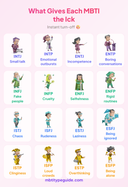
Ever wonder why your group chat is the way it is? Blame (or thank!) your friends' MBTI types. Find out the hilarious role each personality plays!
My palms are sweating as I tell you this: I once completely misunderstood what an INFP client genuinely needed in a relationship. We often mistake their quiet intensity for simple sensitivity, missing the deep depths they crave.
My palms are sweating as I write this, remembering the relationships I’ve watched crumble not from malice, but from the purest intentions. What if the very qualities you rely on, the ones that make you a pillar for others, are quietly eroding your closest bonds?
Unlock the secrets to first date success with our MBTI-based guide! Learn how each personality type approaches dating and get tailored tips to make a lasting impression.
Take our free personality test and find your compatibility with all 16 types.
The integration: both operating levels are valid and necessary. The INFJ's depth informs better care. The ESFJ's practicality turns caring into tangible help. The relationship works when both people appreciate what the other contributes rather than insisting on their own operating level.
The ESFJ is an extravert who recharges through social interaction. People-time is energy-giving. Community events, family gatherings, group activities — these are how the ESFJ fills their tank.
The INFJ is an introvert who recharges through solitude. People-time is energy-draining, even when enjoyable. Quiet evenings, solo reflection, small-group depth conversations — these are how the INFJ fills their tank.
The ESFJ wants to host a dinner party. The INFJ wants a quiet night with a book. The ESFJ wants to attend the community event. The INFJ wants to stay home.
This isn't a dealbreaker — but it requires active management. The INFJ attends the events that matter most to the ESFJ. The ESFJ respects the INFJ's need for recovery time afterward. Neither judges the other's energy system.
The ESFJ builds independent social connections so the INFJ isn't the sole social outlet. The INFJ communicates boundaries clearly so the ESFJ doesn't take the withdrawal personally.
The sweet spot: small gatherings with depth. Not big parties (too draining for the INFJ) and not solo evenings (too isolating for the ESFJ). Dinner with two close friends. A double date. An intimate gathering where both people can engage at their natural level.
Both ESFJ and INFJ are natural caretakers. Both give. Both struggle to receive. Both tend to ignore their own needs in service of others.
In other pairings, one person is usually the giver and the other the receiver. In ESFJ-INFJ, both people are givers — which creates a specific kind of problem: who takes care of the caretakers?
The answer has to be: each other. But it requires both people to do something that goes against their wiring: ask for help.
The ESFJ, who has spent their life anticipating others' needs, must learn to state their own: 'I need a break.' 'I need help with this.' 'I need you to handle dinner tonight.'
The INFJ, who has spent their life absorbing others' emotions, must learn to share their own: 'I'm overwhelmed.' 'I need to be alone.' 'I need you to not need anything from me right now.'
Both requests feel selfish. Neither is. And the relationship that makes space for both people's needs is far more sustainable than one where both people give until they collapse.
ESFJ-INFJ creates a home that is almost supernaturally warm. Both people invest in the emotional atmosphere. Both pay attention to the needs of everyone who enters. The household runs on compassion, consideration, and an acute awareness of how people feel.
This warmth extends to each other. Both people feel deeply cared for — the ESFJ through the INFJ's perceptive understanding, the INFJ through the ESFJ's practical devotion. The love is visible in both directions, expressed differently but received fully.
An ESFJ on their INFJ: 'He understands me in a way that nobody else does. Not the surface me — the real me, the one who's tired of taking care of everyone, the one who just wants someone to notice. He notices. He always notices. He'll say, you're running on empty — and he's right. He sees past my smile and finds the person behind it. Nobody else does that.'
The INFJ: 'She takes care of the world so I can focus on the depths. The practical things — the meals, the schedules, the social obligations — she handles all of it with a grace that makes it look effortless. But I know it's not effortless. I see the effort. And I make sure she knows I see it. Because the most painful thing for someone like her is doing all that work and having it be invisible. I won't let it be invisible.'
ESFJ-INFJ: two caretakers who finally found someone to take care of them. The warmest fortress in the type system — built with hands and perception, maintained with love and insight.