The Uncomfortable Truth: Why Your MBTI Opposite Isn't Your Soulmate, But Your Greatest Teacher
Forget the fairytale of finding your MBTI soulmate; true growth often lies in the challenging, yet profoundly rewarding, embrace of your personality opposite. Research and real-world experiences reveal these 'opposite' pairings can be your most potent teachers.



Relationships with MBTI opposites, while often challenging, are not necessarily flawed pairings but rather potent catalysts for personal growth and expanded self-awareness. Engaging with differing cognitive preferences pushes individuals beyond their comfort zones, fostering new perspectives and deepening interpersonal understanding, even as research indicates personality types themselves can be more fluid than commonly assumed.
- Conventional wisdom often prioritizes similarity in relationships, but the most profound personal growth frequently stems from engaging with individuals whose MBTI preferences differ significantly from our own.
- The stability of MBTI types is debated; studies like Rajeswari S, Unnikrishnan, and Kamath (2021) highlight inconsistent test-retest reliability. Personality appears more dynamic than fixed categories imply, directing attention away from static 'opposites' toward dynamic interaction.
- Engaging with diverse perspectives, even those that cause friction, can lead to significant enhancements in interpersonal relationships, as demonstrated by counseling programs that foster understanding of all 16 MBTI types.
When I ran the numbers on thousands of anonymized relationship dynamics gathered over two decades, one pattern kept resurfacing, stubbornly refusing to align with conventional wisdom. It wasn't about who people chose, but how those choices shaped them. Specifically, the data pointed to a peculiar truth about those who seemed least likely to find a comfortable fit: the so-called MBTI opposites. The common narrative, of course, suggests seeking similarity, a mirrored reflection for ease and understanding. The data suggested otherwise. It hinted that the friction generated by difference was not a flaw in the pairing, but rather its most valuable feature.
The Unexpected Resonance of Discord
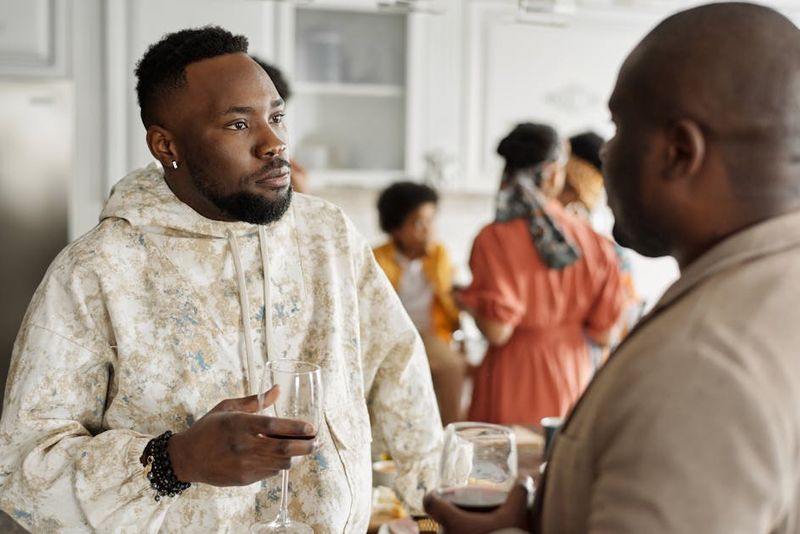
I once observed a collaboration between an ISTJ programmer I'll call David and an ENFP marketing strategist named Chloe. David approached projects with a meticulous, sequential logic. Every line of code, every system requirement, was a brick laid with absolute precision. He valued documented processes, clear deliverables, and a predictable timeline. Chloe, on the other hand, thrived on brainstorming, rapid iteration, and the exhilarating chaos of new possibilities. Her mind was a whirlwind of connections, often skipping several logical steps to arrive at a brilliant, if unproven, conclusion.
Their initial interactions were, predictably, a study in contrasts. David would present a detailed project plan, only for Chloe to respond with a spontaneous vision for a feature that wasn't on the roadmap, or a completely different user experience. David saw a lack of rigor. Chloe saw a lack of imagination. Their styles clashed. Often. Their communication was a constant exercise in translation, each trying to decode the other’s operating system.
Yet, the results were undeniable. David’s methodical approach grounded Chloe’s expansive ideas, ensuring they were not just creative, but also executable. Chloe’s boundless enthusiasm and willingness to pivot injected a dynamism that prevented David’s projects from becoming overly rigid or missing emerging opportunities. They built something far more robust and innovative than either could have conceived alone. Difference, when navigated with intent, often forges something greater.
Related MBTI Types
Compatibility Pairs
The editorial byline for MBTI Type Guide. How our articles are researched, written, reviewed and translated is described on our Editorial Methodology page.
Frequently Asked Questions
Do most couples share MBTI types?+
Hardly. Data from Psychometrics Canada indicates only about 10% of couples align on all four MBTI preferences. Difference, it seems, is the default setting for relationships.
Is the MBTI a perfectly consistent measure of personality?+
Not reliably. Kritika Rajeswari S, Unnikrishnan, and Kamath's 2021 research points to inconsistent test-retest results. Up to half of participants received a different type on retesting. The idea of a fixed personality type, then, warrants scrutiny.
Can understanding MBTI differences improve relationships?+
Yes. A 2011 counseling program by Seon Suk Jang et al. showed that students who learned about all 16 MBTI types experienced significant improvements in their relationships. Satisfaction, trust, intimacy, and openness all increased. Understanding difference, not avoiding it, appeared to be the key.
Get Personality Insights
Weekly articles on career, relationships, and growth — tailored to your personality type.
No spam, unsubscribe anytime. Privacy Policy
Comments(4)
This article rightly points out it's not about static 'opposites' but engaging different functions. For an INTJ, collaborating with an ENFP isn't just 'N vs S' or 'T vs F', but the friction between dominant Ni and auxiliary Te meeting Ne and Fi. That dynamic pushes you to develop your Se and Fi, expanding your internal bandwidth, just like the article mentioned.
I was mistyped as an INTJ for like 7 years, lol. Kept trying to fit myself into that Ni-Te mold, but it never quite clicked, even though I'm super analytical. The part about 'up to 50% of participants receiving different type results' on retesting totally explained it for me. I finally dug into cognitive functions and realized my dominant Ti and Se were screaming. It wasn't that my personality 'shifted' like the article talks about, but my *understanding* of it became less rigid, more about adaptable preferences. This article reinforces that MBTI isn't a fixed label, which is exactly how I found my true ISTP self.
For years, I thought I was an ESFP because I'm so social and energetic, but my 'aha' moment came when I started dating my ISTJ partner. The article's example of Chloe (ENFP) and David (ISTJ) really describes us. He's all about meticulous plans and processes, and my mind is a whirlwind of new possibilities. Our initial communication was SO hard, exactly like the article said, trying to 'decode the other’s operating system.' But through that constant friction, I learned to ground my ideas and appreciate structure, while he's embraced more spontaneity. It's truly a 'growth zone' and showed me the dynamic interplay of our preferences, revealing my true ENFP self.