MBTI Insights & Articles
Expert articles on MBTI personality types in relationships, careers, personal growth, and more


The Silent Sabotage: Why ISFJs' Unspoken Needs Erode Love
The Silent Sabotage: Why ISFJs' Unspoken Needs Erode Love
ISFJs are known for their quiet strength, but this very trait can silently sabotage their deepest relationships, leading to burnout and hidden resentment. It's time to challenge the myths around their selfless nature.

Why High-Achieving ENFPs Still Feel an Unspoken Emptiness
Why High-Achieving ENFPs Still Feel an Unspoken Emptiness
Many ENFPs report high job satisfaction, yet a pervasive sense of career emptiness often lingers. This article explores the hidden needs that conventional workplaces struggle to meet, revealing why enthusiasm alone isn't enough.

When Silence Becomes a Chasm: Unspoken Needs Breaking INFP Friendships
When Silence Becomes a Chasm: Unspoken Needs Breaking INFP Friendships
My heart aches for every INFP who's watched a cherished friendship slowly fade, not with a bang, but with a quiet, devastating whimper. This guide helps us courageously illuminate the hidden needs that, left unvoiced, can create an unbridgeable distance. We're not here to blame anyone.

About Workplace Emotions, Most INTJs Get This Wrong
About Workplace Emotions, Most INTJs Get This Wrong
For the INTJ, workplace emotions often feel like an illogical variable. But what if mastering this terrain isn't about abandoning logic, but applying a strategic mind to understand it with precision? This is the story of how one architect learned to decode the human system.


My Own Crossroads: When the 'Helping' Role Felt Empty
My Own Crossroads: When the 'Helping' Role Felt Empty
As Dr. Sarah Connelly, I share my personal struggle with burnout as an ENFJ, revealing how the very 'helping' roles meant to bring purpose instead led to a profound emptiness. My own experience uncovers surprising truths about authentic impact.
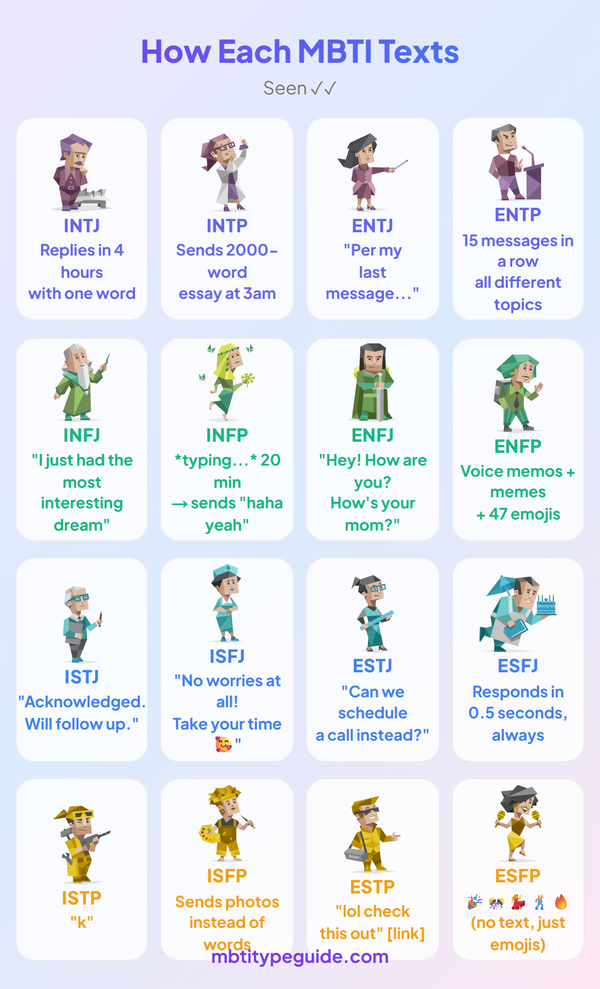
How Every MBTI Type Texts (And What It Really Means)
Ever wonder why your INTJ friend texts like a robot or your ENFP pal sends walls of emojis? Here's a hilarious look at how each MBTI type texts...and what it *really* means.

Why Demanding Emotional Vulnerability From ISTPs Backfires
Why Demanding Emotional Vulnerability From ISTPs Backfires
Most relationship advice for ISTPs misses a crucial point: their need for autonomy isn't a flaw to be fixed, but a core operating principle. Misunderstanding this can silently erode a relationship.

The Silent Sabotage: How Each Feeling Type's Unspoken Needs Break Trust
The Silent Sabotage: How Each Feeling Type's Unspoken Needs Break Trust
My own relationship struggles taught me this hard truth: Feeling types, with all their empathy, often sabotage connections by failing to voice their deepest needs. Let's uncover these hidden patterns and learn to speak our truth.
When Logic Meets Tears: Decoding Workplace Conflict for the INTJ Mind
When Logic Meets Tears: Decoding Workplace Conflict for the INTJ Mind
Many believe INTJs are immune to emotional workplace conflicts, relying solely on logic. The truth is far more complex, revealing a sophisticated internal world often misunderstood, even by INTJs themselves.

The Hidden Costs: Why ESTJs' Strengths Sabotage Their Relationships
The Hidden Costs: Why ESTJs' Strengths Sabotage Their Relationships
Behind the composed exterior of the ESTJ lies a complex interplay of unspoken needs. When these needs remain unaddressed, the very traits that define their competence can silently erode even their most significant relationships.
INFJ Boundaries: Why a Door Slam Is a Failure, Not a Solution
INFJ Boundaries: Why a Door Slam Is a Failure, Not a Solution
INFJs often resort to the 'door slam' out of sheer exhaustion. This piece dives into why this isn't a strength, but a sign of neglected boundaries, and offers proactive, Ti-fueled alternatives that honor your true Ni-Fe self.

The Unseen Anxiety of the Thinking Type's Vulnerability
The Unseen Anxiety of the Thinking Type's Vulnerability
For analytical minds, vulnerability often feels like a logical fallacy, sparking deep anxiety. But what if embracing emotional openness isn't abandoning logic, but discovering a deeper, more authentic connection?